Building a Home That Grows With You: Why Flexibility Matters When Choosing Where to Live
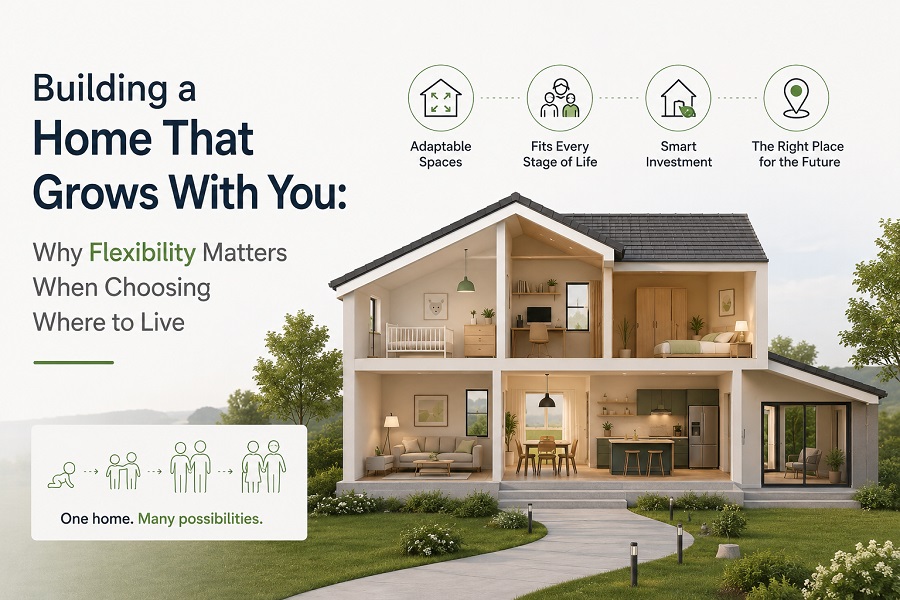
A home is rarely a short-term purchase. For many Australians, it is a place that will support changing lifestyles, growing families, evolving careers, and new opportunities over many years. Because of this, choosing where to build is just as important as deciding what to build.
Across Queensland, buyers are increasingly looking beyond individual house designs and paying closer attention to the communities where those homes will be located. Parks, schools, transport connections, green space, and long-term planning have become just as influential as lot sizes and floor plans.
This shift reflects a broader change in how Australians think about property. Rather than simply purchasing a home, many buyers are searching for neighbourhoods that can adapt alongside their changing needs.
Modern Buyers Are Planning Further Ahead
Property decisions today are often made with a much longer time horizon than in the past.
Instead of asking whether a location suits their current lifestyle, buyers are considering questions such as:
-
Will this community still meet our needs in ten years?
-
Are new schools or shopping centres planned?
-
Will transport improve as the area grows?
-
Is there enough green space for families?
-
How will the neighbourhood evolve over time?
Thinking ahead allows buyers to select communities that offer lasting value rather than simply meeting immediate requirements.
Why Flexibility Is Becoming a Major Priority
Life rarely stays the same.
Careers develop, children grow older, work arrangements change, and personal priorities evolve. A community that provides flexibility is better equipped to support these transitions.
Features that contribute to long-term flexibility include:
-
Diverse housing options
-
Access to quality education
-
Reliable transport links
-
Recreational facilities
-
Nearby employment opportunities
Communities designed around these principles are often able to meet the needs of residents throughout different stages of life.
Planning Creates More Liveable Communities
Successful neighbourhoods do not emerge by accident.
Thoughtful planning considers how residents will live, travel, exercise, socialise, and access everyday services.
Well-planned communities typically include:
-
Landscaped parks
-
Walking and cycling paths
-
Community gathering spaces
-
Sporting facilities
-
Environmental conservation areas
-
Convenient retail centres
These elements improve everyday convenience while contributing to stronger neighbourhood identity.
Green Spaces Continue to Shape Buyer Preferences
Access to nature has become one of the defining characteristics of desirable residential communities.
Parks and open spaces provide opportunities for:
-
Outdoor exercise
-
Family recreation
-
Children’s play
-
Community events
-
Relaxation
Green infrastructure also enhances the visual appeal of neighbourhoods while supporting environmental sustainability.
As cities continue expanding, communities that preserve natural landscapes are becoming increasingly valuable.
Convenience Means More Than Shorter Commutes
Traditionally, convenience was measured primarily by distance to the city.
Today, buyers evaluate convenience more broadly.
They increasingly prioritise access to:
-
Schools
-
Healthcare
-
Supermarkets
-
Sporting clubs
-
Public transport
-
Local cafés and restaurants
Reducing travel time for everyday activities can significantly improve quality of life.
Housing Choices Should Match Lifestyle Goals
Every household has different priorities.
Some buyers require larger homes for growing families, while others prefer lower-maintenance living that allows more time for travel or recreation.
The surrounding community should support these lifestyle choices.
Neighbourhoods that offer diverse housing opportunities create flexibility while encouraging a balanced mix of residents.
Population Growth Is Driving Community Development
Queensland continues experiencing strong population growth, particularly across South East Queensland.
To accommodate this demand, new communities are being designed with long-term liveability in mind.
Rather than focusing solely on increasing housing supply, many developments are incorporating:
-
Extensive park networks
-
Environmental preservation
-
Active transport infrastructure
-
Community facilities
-
Future retail precincts
This integrated approach creates neighbourhoods that continue improving as they mature.
Infrastructure Investment Supports Future Growth
Infrastructure often determines how successfully a community develops.
Road upgrades, schools, healthcare facilities, public transport, and retail centres all contribute to residential appeal.
Buyers should research both existing infrastructure and projects planned for the coming years.
Understanding future investment helps provide a clearer picture of how a neighbourhood may evolve over time.
The Value of Building Within an Emerging Community
One advantage of purchasing within a developing neighbourhood is the opportunity to become part of its growth story.
As new residents move in, communities often gain:
-
Additional local businesses
-
Sporting organisations
-
Community events
-
Improved public facilities
-
Expanded services
These changes contribute to stronger neighbourhood identity while enhancing everyday convenience.
Comparing Different Housing Pathways
Some buyers choose established homes, while others prefer to build from the ground up.
Building often provides greater flexibility by allowing homeowners to customise layouts, energy efficiency features, and outdoor spaces.
For many households, house and land packages bahrs scrub offer an opportunity to create a home tailored to their lifestyle while becoming part of a growing residential community designed with future development in mind.
The appeal lies not only in the home itself but also in the surrounding neighbourhood and the long-term vision supporting its growth.
Queensland’s Growth Will Continue Beyond 2032
Major infrastructure investment associated with the Brisbane 2032 Olympic Games is expected to influence residential development across many parts of the state.
Improved transport, sporting facilities, and public infrastructure may enhance connectivity and support ongoing population growth.
As a result, many buyers researching olympic boom queensland suburbs are looking beyond short-term property trends and focusing on communities positioned to benefit from long-term planning and investment.
Rather than attempting to predict rapid market movements, they are evaluating the underlying factors that contribute to sustainable residential demand.
Making a Decision With the Future in Mind
Choosing where to live is about much more than purchasing a block of land or building a house.
It involves selecting a community that will continue supporting your lifestyle as circumstances change.
Questions worth considering include:
-
Will this neighbourhood remain convenient in the future?
-
Are there opportunities for recreation and community engagement?
-
Is infrastructure keeping pace with population growth?
-
Does the area provide flexibility for different life stages?
Answering these questions can provide greater confidence when making one of life’s biggest financial decisions.
Conclusion
Building a home is ultimately about creating a place that supports both present needs and future aspirations.
Communities designed with long-term planning, quality infrastructure, green spaces, and lifestyle opportunities are increasingly attracting buyers who want more than simply a place to live.
Whether exploring house and land packages bahrs scrub or researching olympic boom queensland suburbs, taking the time to understand how a community is expected to evolve can help buyers make informed decisions that deliver lasting value for years to come.